MemoHive Official Website › Dose Notes › 3% salidroside
Rhodiola At 3% Salidroside: What That Figure Specifies, And What It Leaves Open
A percentage on a botanical row is more information than most of this shelf offers, and it answers one question rather than two. Knowing which question it answers is the difference between reading a label and trusting it.
- 3% of 100 mg is 3 mg. The arithmetic a printed standardisation lets you do. It converts a weight of extract into a weight of the marker compound.
- Potency and identity are different questions. A percentage of salidroside measures how much of one marker an extract carries. Telling one Rhodiola species from another is a job rosavin does instead.
- About one product in five carried no rosavin. In an analysis of roughly forty commercial rhodiola products sold as R. rosea. That is a finding about the category, not a test of this bottle.
- 400 mg and 576 mg a day. The amounts in the two rhodiola trials cited here that state one. Neither of them set out to measure memory, and this serving prints 100 mg.
What a standardisation percentage is for
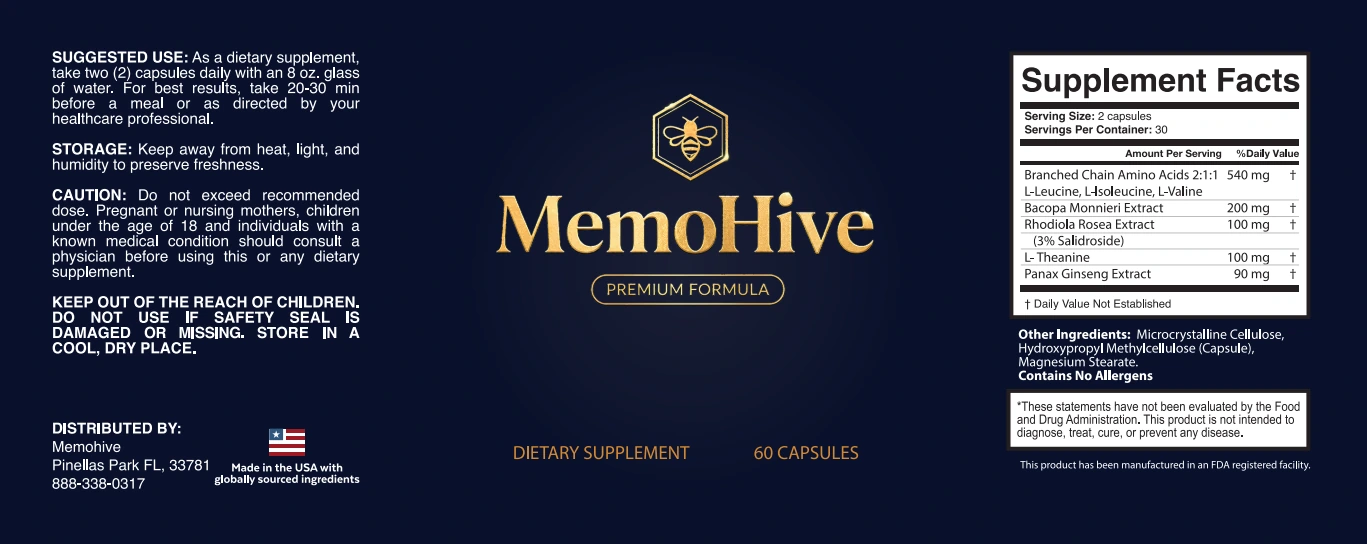
The rhodiola row on this panel reads Rhodiola Rosea Extract (3% Salidroside), 100 mg. It is the only row of the five with a standardisation printed beside it.
A standardisation figure does one specific job: it converts a weight of extract into a weight of the compound the extract is measured by. Three per cent of 100 mg is 3 mg of salidroside, and that is arithmetic the label has made available rather than a number the label prints. Without the percentage, 100 mg of extract could contain almost any amount of it.
That is genuinely useful and it is worth recognising before the caveats arrive. Botanical extracts vary by plant part, by growing conditions, by solvent and by process, and a printed percentage is the one thing on a botanical row that narrows the variation to something checkable. The reference guide on this website covers how the rest of a panel is built.
One thing the arithmetic does not buy: 3 mg of salidroside is not a studied amount. No trial in this citation set used a salidroside figure as its dose, so the conversion produces a number that can be checked against the bottle and not against the literature.
Potency and identity are two different questions
Here is the part that is worth explaining properly, because it is interesting rather than damaging.
The 2016 analysis of rhodiola products describes rosavin as the key reference marker used to distinguish Rhodiola rosea from related species, and describes salidroside as another marker compound found in other Rhodiola species. Those two sentences are the whole point. A salidroside percentage is a real, measurable specification of potency. It is not, on its own, a specification of species, because salidroside is not unique to R. rosea.
Why that matters is in the same paper. Across roughly forty commercial products, about one fifth of those claiming to be Rhodiola rosea contained no rosavin at all; some appeared to contain no salidroside either; and around eighty per cent of the remainder were lower in rosavin than registered medicines and appeared to have been adulterated with other Rhodiola species.
A 2018 DNA-barcoding audit of fourteen roseroot products sold in the United Kingdom reached a similar place by a completely different method. Of the ten products in which Rhodiola DNA could be detected, five matched Rhodiola rosea.
Both of those are findings about a market, not tests of this bottle. Neither study examined MemoHive and neither could, so nothing here says this extract is or is not what its row says it is. What they establish is why the question is worth asking of any rhodiola product, and what a percentage on a label does and does not settle.
| Marker | What it is used for | What a printed percentage settles |
|---|---|---|
| Rosavin | The reference marker used to distinguish R. rosea from related species. | Species, when it is measured. This panel prints no rosavin figure, and most rhodiola labels do not. |
| Salidroside | A marker compound that also occurs in other Rhodiola species, measured as a percentage of extract weight. | Potency of that marker. Three per cent of 100 mg is 3 mg, which is the arithmetic this label makes possible. |
One row of this table describes what the label carries and the other describes what a different measurement would carry. Both are ordinary practice in botanical supplements.
The two rhodiola trials that print a milligram figure
The dose half of the comparison is thinner for rhodiola than for bacopa, for a reason worth knowing: several of the older rhodiola trials describe their dosing as one tablet daily or a low repeated dose regime and never print a milligram figure at all. A comparison cannot be built on those without someone supplying a number from outside the paper, which is how invented figures end up on websites. Two trials in this citation set do print one.
Kasper 2017 gave 400 mg a day of the extract WS 1375 for twelve weeks to 118 outpatients with burnout symptoms. It is open-label and single-arm, with no placebo group, which the authors are explicit about: they describe it as the exploratory data required for planning future randomised trials. It shows a course over time, and time on its own would move some of those scales.
Olsson 2009 is the stronger design: 576 mg a day of the standardised extract SHR-5 for 28 days, 60 adults, randomised, double-blind and placebo-controlled. Burnout score and several attention measures improved against placebo.
Both trials measured fatigue and stress. Neither measured memory.
| Trial | What it gave | What it measured | Printed on this label |
|---|---|---|---|
| Kasper 2017, open-label, no placebo group | 400 mg a day of WS 1375, for twelve weeks, in 118 outpatients. | Burnout symptoms, over time rather than against placebo. | 100 mg per serving |
| Olsson 2009, randomised and placebo-controlled | 576 mg a day of SHR-5, for 28 days, in 60 adults. | Burnout score, attention measures and the cortisol awakening response. | 100 mg per serving |
Two named extracts, two designs of unequal strength, and one printed amount that is below both. The outcome column is there because the measure a trial chose is as much a part of the comparison as the milligrams it used.
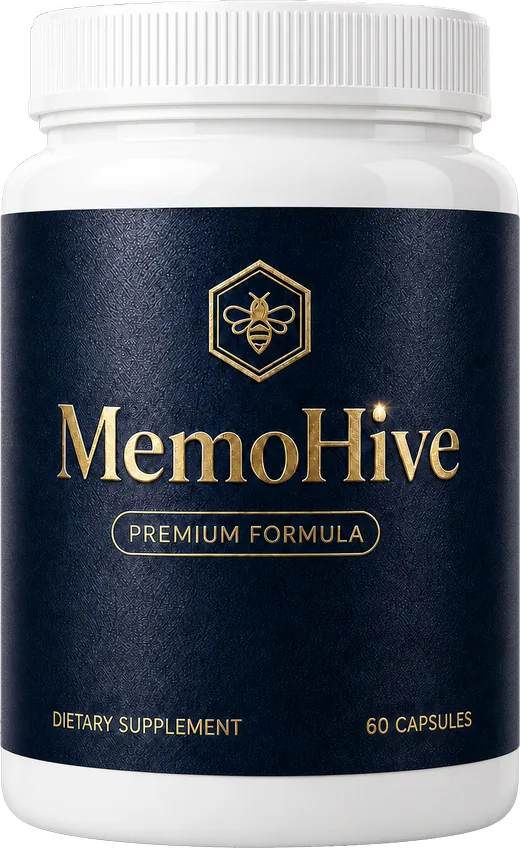
The MemoHive label, in full
Five ingredients with an amount beside each, one standardisation, and a printed total of 1,030 mg per two-capsule serving. The panel is transcribed on this website and the bottle ships from the official checkout.
Order MemoHiveWhat the rhodiola literature adds up to
The systematic review of rhodiola for physical and mental fatigue collected eleven trials. Two of the six physical-fatigue trials and three of the five mental-fatigue trials reported an effect, which is roughly half. Its judgment on all eleven is the part to carry away: every included study exhibited either a high risk of bias or reporting flaws that hindered assessment of its true validity.
The National Center for Complementary and Integrative Health states the position more flatly still. There is not enough reliable evidence to determine whether rhodiola or its components are useful for any health-related purpose. The same page records that rhodiola is possibly safe for up to twelve weeks, that side effects may include dizziness, headache, insomnia and either dry mouth or excessive saliva, that little is known about use in pregnancy or breastfeeding, and that interactions have been reported with losartan, a blood pressure medicine.
That last item is the kind of specific, actionable thing a person can take to a prescriber, which is why it is repeated on the safety page rather than left in a blog post.
One summary sentence is worth making explicitly, because it is easy to assume otherwise from the company a rhodiola row keeps on a label like this one. Every rhodiola study named on this page measured fatigue, stress or burnout. The eleven trials in the fatigue review measured fatigue. The two trials that print a milligram figure measured burnout scores and attention. None of them measured memory, at 100 mg or at 576 mg or at anything in between, so there is no memory result here to compare an amount against in either direction. The row this panel does carry a memory literature for is bacopa, and it is 200 mg.
What to do with a percentage on a label
Three habits come out of all of the above, and none of them requires any information a buyer does not already have.
- Do the arithmetic. A percentage and a weight give a marker amount in one multiplication, and a label that supplies both has told you something a label that supplies neither has not.
- Ask what the marker identifies. Potency and species are separate questions, and a percentage of a marker that occurs in several species answers the first one.
- Read the outcome, not only the amount. Both rhodiola trials with printed figures measured fatigue and stress, so the size of the gap between 400 mg and 100 mg is a secondary question to what was being measured in the first place.
On this panel the rhodiola row is the smallest-but-one by weight and the most fully specified of the five. Both of those are true at once, and the ingredients page prints them in the same row.
What this is, and what it is not. MemoHive is a dietary supplement. It is not a medicine, it is not a treatment for any condition, and nothing on this page describes it as one. Every study named here tested a single ingredient, at its own amount, in its own group of people, and none of them tested this formula. Memory or thinking that is changing in a way that worries you is worth raising with a clinician rather than answering with a capsule.
Sources cited in this article
- Booker A, Jalil B, Frommenwiler D, Reich E, Zhai L, Kulic Z, Heinrich M. The authenticity and quality of Rhodiola rosea products. Phytomedicine. 2016;23(7):754-62. PMID 26626192. https://pubmed.ncbi.nlm.nih.gov/26626192/
- Ruhsam M, Hollingsworth PM. Authentication of Eleutherococcus and Rhodiola herbal supplement products in the United Kingdom. J Pharm Biomed Anal. 2018;149:403-409. PMID 29154110. https://pubmed.ncbi.nlm.nih.gov/29154110/
- Kasper S, Dienel A. Multicenter, open-label, exploratory clinical trial with Rhodiola rosea extract in patients suffering from burnout symptoms. Neuropsychiatr Dis Treat. 2017;13:889-898. PMID 28367055. https://pubmed.ncbi.nlm.nih.gov/28367055/
- Olsson EM, von Scheele B, Panossian AG. A randomised, double-blind, placebo-controlled, parallel-group study of the standardised extract SHR-5 of the roots of Rhodiola rosea in the treatment of subjects with stress-related fatigue. Planta Med. 2009;75(2):105-12. PMID 19016404. https://pubmed.ncbi.nlm.nih.gov/19016404/
- Ishaque S, Shamseer L, Bukutu C, Vohra S. Rhodiola rosea for physical and mental fatigue: a systematic review. BMC Complement Altern Med. 2012;12:70. PMID 22643043. https://pubmed.ncbi.nlm.nih.gov/22643043/
- National Center for Complementary and Integrative Health, National Institutes of Health. Rhodiola. Last updated April 2025. https://www.nccih.nih.gov/health/rhodiola