MemoHive Official Website › Dose Notes › L-theanine at 100 mg
L-Theanine At 100 mg: The One Amount On This Panel Inside A Studied Dose
Four of the five rows on this label sit below or outside the amounts the published work used. One does not. The fair thing to do with that is to say it once, show the study it rests on, and let the size of the finding speak at its actual size.
- 100, 200 and 400 mg, against placebo. A four-way crossover in 32 healthy adults tested three amounts of L-theanine in the same people on different days.
- Simple reaction time improved at 100 mg. By about 16.3 milliseconds once the placebo change was subtracted, and by 16.9 ms at 200 mg. Four hundred did not beat one hundred.
- Nothing else moved at any amount. Sustained attention and inhibitory control did not change at 100, 200 or 400 mg in that study.
- The repeated-dose work sits higher. Trials that gave L-theanine daily for weeks used 200 mg, and the stress and anxiety reviews put their range at 200 to 400 mg a day.
The study that tested 100 mg against 200 and 400
Most supplement research tests one amount against a placebo. The 2023 dose-response study of L-theanine did something more useful: it gave 32 healthy young adults placebo, 100 mg, 200 mg and 400 mg in four separate sessions, double-blind, so every participant served as their own control at every amount.
That design is worth a sentence of its own. A crossover removes the differences between people from the comparison, which is exactly the noise that swamps small cognitive effects, and a three-step ladder inside one sample answers a question a single-dose trial cannot: whether more produces more.
The result, after the change on placebo was subtracted: simple reaction time improved at 100 mg, by 16.3 milliseconds, and at 200 mg, by 16.9 milliseconds. Sustained attention and inhibitory control did not move at any of the three amounts. The authors’ own summary is that L-theanine improves attention in simple visuomotor tasks and not in more complex sustained attention or executive control tasks.
Sixteen milliseconds is about a sixtieth of a second. It is a real measured difference and it is not a large one, and a page that let it sound large would be spending the credibility the rest of this site is trying to build.
| Amount given | Simple reaction time | Sustained attention and inhibitory control |
|---|---|---|
| 100 mg | Improved by about 16.3 ms against placebo. | No change. |
| 200 mg | Improved by about 16.9 ms against placebo. | No change. |
| 400 mg | No significant improvement. | No change. |
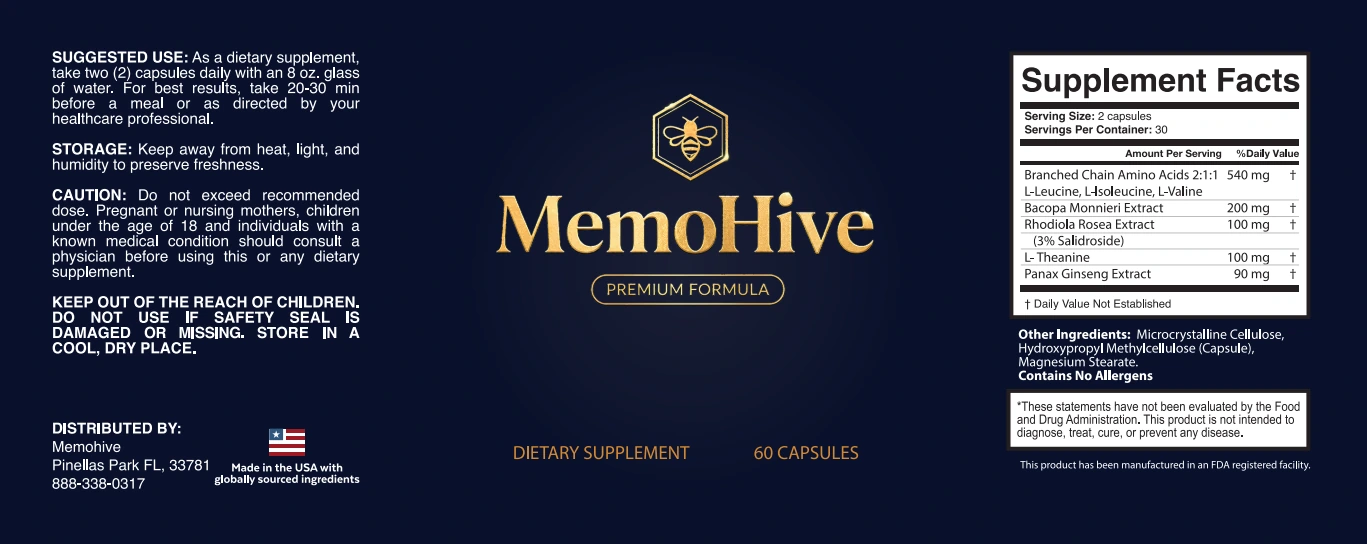
| Printed on this label | 100 mg per serving | The amount, not the result. Nothing here transfers a trial finding to this bottle. |
Every figure in the first three rows belongs to the crossover study linked above, in 32 healthy young adults, measured on the day. The fourth row is the label.
Saying the matching number once, and saying it properly
So this label prints 100 mg of L-theanine, and 100 mg is an amount that has been formally tested against two larger ones and against placebo. That is the sentence, and it is the only row on this panel that earns it.
Here is what it does not mean. It does not mean this capsule produces that result, because the capsule has not been tested and a trial’s finding never travels to a product by matching a number. It does not mean 100 mg is a recommended amount, because a study measuring what a dose does is not a study recommending it. And it does not mean much about memory, which is the question this post closes on.
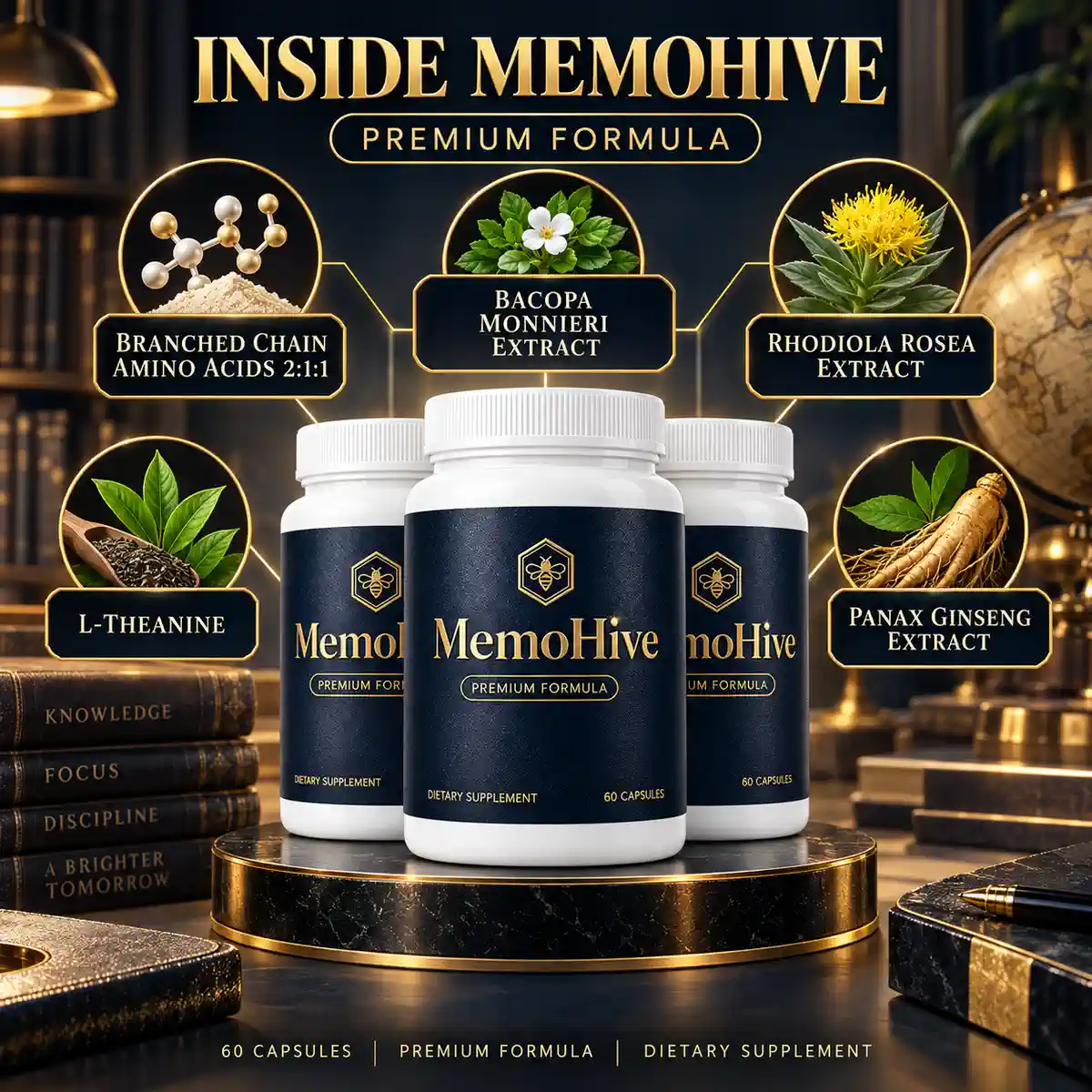
What it does mean is narrower and still worth having: on the one row where a like-for-like comparison is available, the comparison comes out level rather than short. L-theanine is also a single compound rather than a botanical extract, which means the figure on the panel needs no ratio and no marker percentage applied to it before anyone can compare it with anything. That is why this row is the easiest on the panel to check, and the label page sets out the other four beside it.
Why a single compound is the easiest row on any label to check
There is a structural reason this row is the one where a comparison comes out clean, and it applies to any label rather than only to this one.
L-theanine is a single compound. Between the number on the panel and the substance the trials gave there is no plant material, no solvent, no extraction ratio and no marker percentage to convert. A hundred milligrams is a hundred milligrams of the same molecule the crossover study measured.
A botanical row does not work that way. Two extracts of the same plant can be made from different plant parts by different processes and both read as a plain weight on a panel, which is why a standardisation percentage exists and why leaving one off keeps a question open. The rhodiola row on this label carries a percentage; the bacopa and ginseng rows carry an extract weight, which is ordinary practice in this category rather than unusual.
The practical use of that is in comparing two bottles. Two labels both reading L-theanine 100 mg are describing the same amount of the same molecule and can be set directly against each other. Two labels both reading bacopa 200 mg may be describing quite different material, and a printed standardisation is the only thing that narrows the difference. The buying checklist on this website asks that question of any bottle in eight steps.
MemoHive on the official website
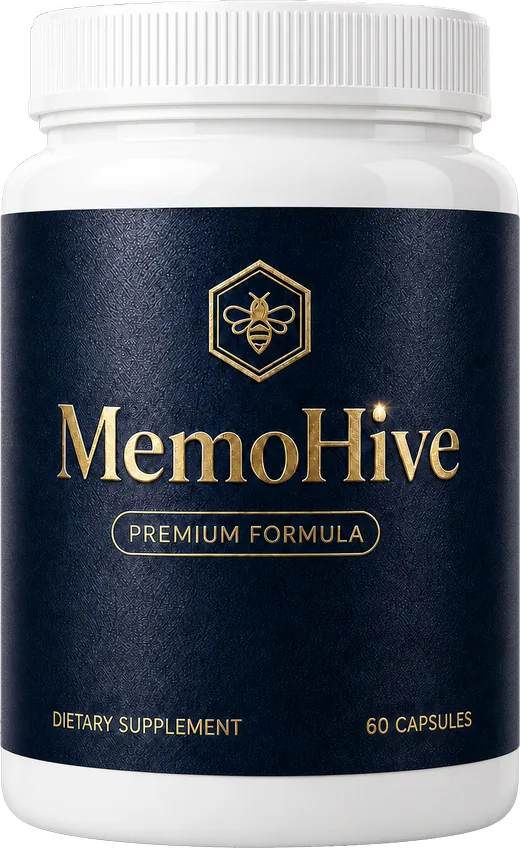
One printed amount for each of the five ingredients, 60 capsules to a bottle and 30 servings, and a 60-day money-back guarantee on every pack. Prices were read on 19 September 2026.
Order MemoHiveWhat the rest of the L-theanine record measured
The crossover above was an acute study: one dose, measurements the same day. The trials that gave L-theanine repeatedly used more of it.
A 2019 randomised trial gave 200 mg a day for four weeks to 30 healthy adults. Sleep quality, depression and trait-anxiety scores fell, and verbal fluency and executive function scores improved. The verbal fluency result was strongest in the half of the sample that started lowest, which makes it a subgroup finding and worth naming as one rather than quoting flat.
The systematic review of L-theanine for stress and anxiety pooled nine randomised controlled trials and put its working range at 200 to 400 mg a day for people under stressful conditions. That review is about stress and anxiety rather than about what this product is sold for, so it is here as a dose reference and nothing more.
Put the three together and the shape is clear. The acute ladder runs from 100 mg; the repeated-dose trials sit at 200; the stress reviews run 200 to 400. This serving prints 100 mg, which is inside the first of those three and below the other two.
The caffeine question, stated as a fact rather than a verdict
Most of the sharper attention findings attached to L-theanine come from studies that gave caffeine alongside it, and two reviews say so in their own words.
The systematic review of green tea and the brain reports that beneficial effects on cognition “are observed under the combined influence of both caffeine and l-theanine, whereas separate administration of either substance was found to have a lesser impact”. Lesser is not none, and the review is about green tea rather than about isolated L-theanine, both of which are worth keeping in the sentence.
The meta-analysis of the tea constituents puts numbers on it. Across eleven randomised placebo-controlled studies, the moderate effect sizes in the first two hours after a dose belonged to caffeine and L-theanine taken together, on alertness and attentional switching accuracy. Its moderator analysis found effect size tracking the caffeine dose more closely than the L-theanine dose.
This formula contains no caffeine. That is a fact about the panel rather than a selling point, and it has one consequence for reading the literature: the combination findings are not the ones to read this row by. The single-substance evidence is the relevant evidence here, and the single-substance evidence is the sixteen milliseconds above.
And memory, which is the word on the bottle
MemoHive is sold for memory and mental clarity, which makes one more citation unavoidable.
A 2023 review of 103 memory supplements sold in United States pharmacies and grocery stores assessed the eighteen commonest ingredients among them. L-theanine appears in the list of ingredients for which, in the review’s own phrase, there is no compelling evidence for memory.
That is not a contradiction of anything above. Reaction time, alertness and calm are not memory, and a row can have a real record in one and no record in the other. The honest position for this ingredient is that its evidence is in the first group, it is short-lived, and the amount printed here is a tested one. Three true statements, none of them stretched.
The row on this panel with the memory literature behind it is bacopa, and the ingredients page keeps the two apart on purpose.
What this is, and what it is not. MemoHive is a dietary supplement. It is not a medicine, it is not a treatment for any condition, and nothing on this page describes it as one. Every study named here tested a single ingredient, at its own amount, in its own group of people, and none of them tested this formula. Memory or thinking that is changing in a way that worries you is worth raising with a clinician rather than answering with a capsule.
Sources cited in this article
- Dassanayake TL, Wijesundara D, Kahathuduwa CN, Weerasinghe VS. Dose-response effect of L-theanine on psychomotor speed, sustained attention, and inhibitory control: a double-blind, placebo-controlled, crossover study. Nutr Neurosci. 2023;26(11):1138-1146. PMID 36263942. https://pubmed.ncbi.nlm.nih.gov/36263942/
- Hidese S, Ogawa S, Ota M, Ishida I, Yasukawa Z, Ozeki M, Kunugi H. Effects of L-Theanine Administration on Stress-Related Symptoms and Cognitive Functions in Healthy Adults: A Randomized Controlled Trial. Nutrients. 2019;11(10):2362. PMID 31623400. https://pubmed.ncbi.nlm.nih.gov/31623400/
- Williams JL, Everett JM, D'Cunha NM, Sergi D, Georgousopoulou EN, Keegan RJ, McKune AJ, Mellor DD, Anstice N, Naumovski N. The Effects of Green Tea Amino Acid L-Theanine Consumption on the Ability to Manage Stress and Anxiety Levels: a Systematic Review. Plant Foods Hum Nutr. 2020;75(1):12-23. PMID 31758301. https://pubmed.ncbi.nlm.nih.gov/31758301/
- Mancini E, Beglinger C, Drewe J, Zanchi D, Lang UE, Borgwardt S. Green tea effects on cognition, mood and human brain function: A systematic review. Phytomedicine. 2017;34:26-37. PMID 28899506. https://pubmed.ncbi.nlm.nih.gov/28899506/
- Camfield DA, Stough C, Farrimond J, Scholey AB. Acute effects of tea constituents L-theanine, caffeine, and epigallocatechin gallate on cognitive function and mood: a systematic review and meta-analysis. Nutr Rev. 2014;72(8):507-22. PMID 24946991. https://pubmed.ncbi.nlm.nih.gov/24946991/
- Hersant H, He S, Maliha P, Grossberg G. Over the Counter Supplements for Memory: A Review of Available Evidence. CNS Drugs. 2023;37(9):797-817. PMID 37603263. https://pubmed.ncbi.nlm.nih.gov/37603263/