MemoHive Official Website › Dose Notes › Reading a label
Five Printed MemoHive Rows Mean Five Separate Questions
MemoHive lists five active rows and an amount beside each. That gives a buyer something concrete to inspect. It does not make every ingredient equally studied, every extract interchangeable, or the finished five-ingredient formula a tested product. The most honest way to read the panel is one row and one question at a time.
- Named rows help. A named row is more informative than an unnamed blend, not a complete answer.
- Sources have different jobs. The label provides amounts; published sources give context for individual ingredients.
- The formula remains untested. A study of one ingredient is not a study of the finished five-row formula.
- Safety is personal. Questions about medicines and symptoms belong with the printed cautions and a clinician.
A transparent panel is an invitation to inspect
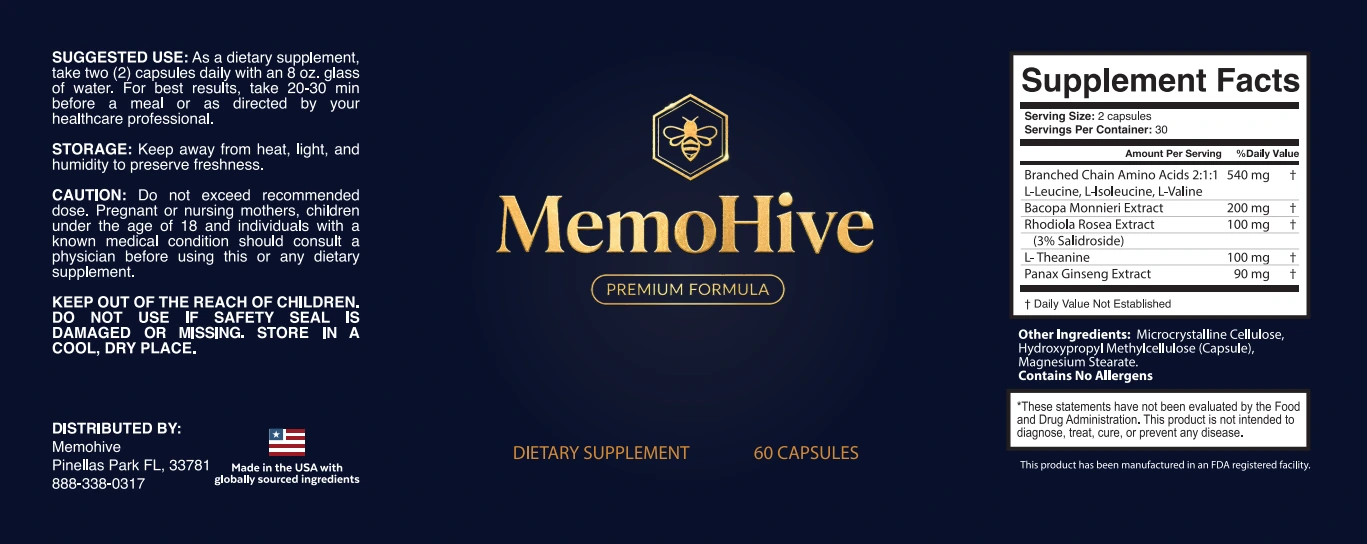
MemoHive's Supplement Facts panel gives five names, five amounts and a 2 capsules serving. That lets a reader ask questions that a proprietary blend label cannot answer cleanly. Which part of the total comes from each row? Does an extract print a standardisation? Are other ingredients and allergen language shown? Does the bottle name a real serving count? The answers can be read from the panel instead of inferred from a front-label phrase.
But transparency has a specific job. It tells the reader what the seller says the bottle contains. It does not establish identity beyond the label, confirm a batch, settle an extract's chemical profile when no standardisation is printed, or demonstrate a result. Those are different questions with different sources. Treating the facts panel as a complete proof simply asks it to do work it was not designed to do.
The five rows are notably uneven in the type of information they offer. Rhodiola is described as 3% salidroside, which lets a reader calculate 3 mg of salidroside from the 100 mg extract. Bacopa and ginseng are called extracts but have no standardisation printed beside their milligram amounts. L-theanine is a stated single compound. The BCAA row prints a 2:1:1 ratio. Those distinctions are reasons to read rows separately, not reasons to rank them from a label alone.
| Printed row | What the label settles | What the label does not settle |
|---|---|---|
| BCAAs 2:1:1, 540 mg | The total and the named ratio | A cognitive result from this formula |
| Bacopa extract, 200 mg | The listed amount | Bacoside standardisation or an exact trial match |
| Rhodiola extract, 100 mg | The listed amount and 3% salidroside | A result from the formula |
| L-theanine, 100 mg | The listed single-compound amount | How it behaves with four other rows |
| Panax ginseng extract, 90 mg | The listed amount | A standardised extract profile or a pooled trial dose |
The questions in the last column are not accusations. They identify information a printed Supplement Facts panel does not claim to supply.
Ingredient evidence has to keep its labels
The strongest reading of a research paper begins by keeping its label intact. The bacopa meta-analysis is about bacopa preparations in its included trials, not about a capsule containing bacopa plus BCAAs, rhodiola, L-theanine and ginseng. The rhodiola systematic review is about the rhodiola studies it could include. The same rule holds for L-theanine, ginseng and BCAAs. A shared ingredient name does not erase preparation, dose, population, duration or comparator.
That is why the five earlier Dose Notes posts were built separately. The L-theanine article can say that one cited study used 100 mg, while the bacopa article can say the cited reviews used 300 to 450 mg per day. The BCAA article can report that the cognitive literature was small and mixed. The ginseng article can report that trials did not settle on a dose to compare with 90 mg. Each statement belongs to an ingredient-specific record, and none becomes a MemoHive outcome claim by being placed on the same website.
The rule protects readers from a common marketing shortcut: selecting the most favourable sentence from five different research areas and then presenting the collection as evidence for a product. The FTC health-products guidance calls for competent and reliable scientific evidence for advertising claims. A product claim needs support for the product claim. A collage of ingredient findings does not answer that question by itself.
- Ask what exact ingredient, extract and dose a cited study used.
- Ask who was studied and for how long.
- Ask whether the cited outcome was measured for the same question a product page is answering.
- Do not add isolated findings together and call the sum a formula result.
Read the MemoHive label before ordering
The official website shows the five listed rows, 2 capsules serving, 60-capsule bottle and seller purchase terms. Check the label and whether it fits your situation first.
Order MemoHiveSafety is not a generic row at the bottom
A label can make a formula easier to inspect without making it appropriate for every buyer. MemoHive's printed caution says not to exceed the recommended dose and tells pregnant or nursing people, people under 18 and people with a known medical condition to consult a physician before use. Those words are broad because the reader's medicines, history and circumstances are not printed on the bottle.
Some row-specific context is relevant when a clinician is deciding whether the broad caution applies. A review of herb interactions with cardiovascular medicines records reports involving ginseng and anticoagulants. The NCCIH Asian ginseng page notes potential effects on blood sugar and clotting. The proper conclusion is not that a particular outcome will happen at MemoHive's 90 mg row; it is that a person using relevant medicines should raise the full label with the clinician or pharmacist who knows their situation.
The label also says not to use the bottle if the safety seal is damaged or missing, to keep it out of the reach of children, and to store it in a cool, dry place away from heat, light and humidity. Those checks happen before a capsule is taken. They are as practical as a milligram comparison and do not require a reader to accept a claim about results.
A five-question reading routine
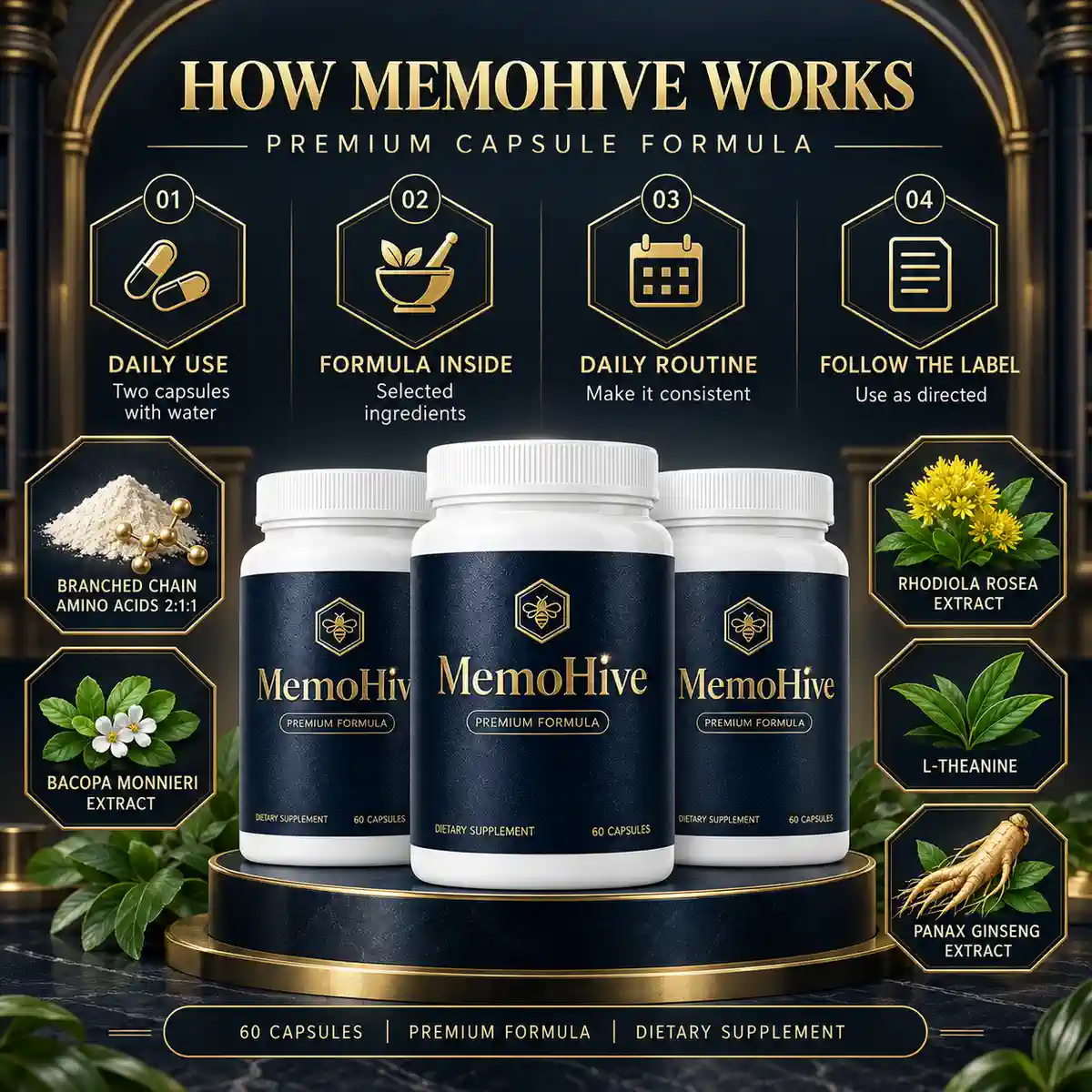
A useful reading routine does not need a verdict at the end. First, identify the product form and serving. Second, write down every active row and its amount. Third, keep any evidence tied to the exact ingredient and study. Fourth, ask whether the person reading the label has a safety reason to pause. Fifth, separate the purchase terms—price, shipping and return policy—from the health question. Each question has a different answer and different evidence behind it.
For MemoHive, that routine ends with a fairly plain record: a dietary supplement in capsule form; five stated active rows totaling 1,030 mg per two capsules; 60 capsules and 30 servings per bottle; directions to take two capsules once daily with water 20 to 30 minutes before a meal; and seller language naming support for memory and mental clarity. It does not end with a claim that the formula treats a condition, prevents a decline, or will create a particular result for a buyer.
If memory or thinking is changing in a way that worries the person or people around them, that is a clinical question, not an ingredient-comparison exercise. MedlinePlus on dietary supplements describes supplements as products used to add to the diet rather than substitutes for care. Keeping that boundary makes the label more useful, not less: it tells a buyer exactly what can be checked before they make a purchase decision.
That approach also leaves room for a buyer to decide not to buy. A label can be complete, the price can be understandable and the return policy can be clear, yet the product can still be a poor fit for a person's medicines, budget or expectations. Declining a purchase after reading a panel carefully is not a failure of research. It is what transparent information is for.
- Read the complete panel, not just the front label.
- Keep one ingredient study attached to one ingredient.
- Treat a formula claim as needing evidence for the formula.
- Check caution, seal and storage before beginning any routine.
- Use a clinician or pharmacist for questions involving symptoms, diagnoses or medicines.
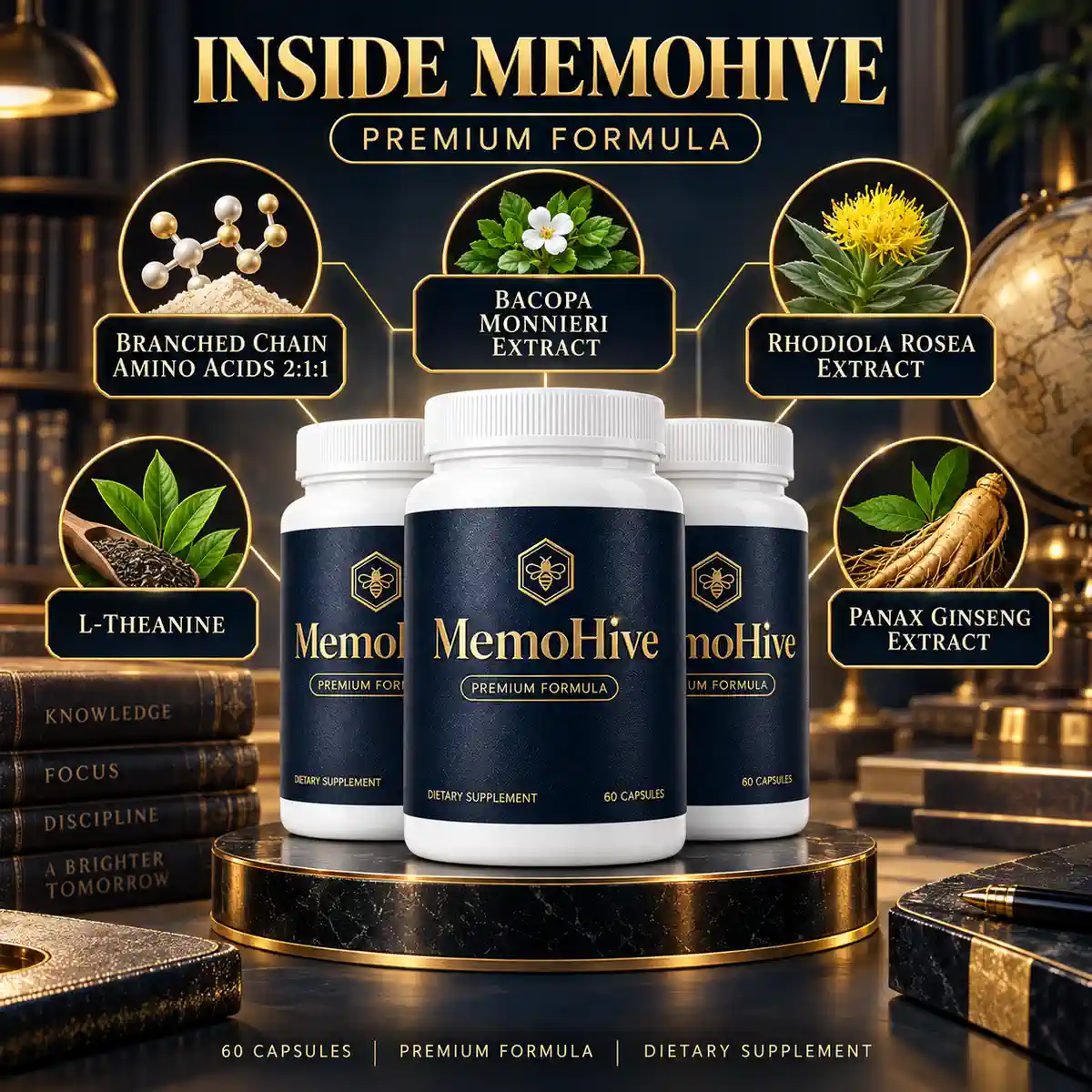
What this is, and what it is not. MemoHive is a dietary supplement. It is not a medicine, it is not a treatment for any condition, and nothing on this page describes it as one. Every study named here tested a single ingredient, at its own amount, in its own group of people, and none of them tested this formula. Memory or thinking that is changing in a way that worries you is worth raising with a clinician rather than answering with a capsule.
Sources cited in this article
- Kongkeaw C, Dilokthornsakul P, Thanarangsarit P, Limpeanchob N, Norman Scholfield C. Meta-analysis of randomized controlled trials on cognitive effects of Bacopa monnieri extract. J Ethnopharmacol. 2014;151(1):528-35. PMID 24252493. https://pubmed.ncbi.nlm.nih.gov/24252493/
- Hung SK, Perry R, Ernst E. The effectiveness and efficacy of Rhodiola rosea L.: a systematic review of randomized clinical trials. Phytomedicine. 2011;18(4):235-44. PMID 21036578. https://pubmed.ncbi.nlm.nih.gov/21036578/
- Izzo AA, Di Carlo G, Borrelli F, Ernst E. Cardiovascular pharmacotherapy and herbal medicines: the risk of drug interaction. Int J Cardiol. 2005;98(1):1-14. PMID 15676159. https://pubmed.ncbi.nlm.nih.gov/15676159/
- National Center for Complementary and Integrative Health, National Institutes of Health. Asian Ginseng: Usefulness and Safety. Last updated February 2025. https://www.nccih.nih.gov/health/asian-ginseng
- Federal Trade Commission. Health Products Compliance Guidance. https://www.ftc.gov/business-guidance/resources/health-products-compliance-guidance
- MedlinePlus, U.S. National Library of Medicine. Dietary Supplements. https://medlineplus.gov/dietarysupplements.html