MemoHive Official Website › Dose Notes › Bacopa at 200 mg
Bacopa At 200 mg, And The Doses The Published Trials Actually Used
Bacopa monnieri is the one ingredient on this panel with systematic reviews behind it, which makes it the one where a dose comparison is worth doing properly. The reviews agree on a range. This label prints a number below it, and the size of that difference is a thing a reader can see for themselves.
- 300 to 450 mg a day. The range across the six randomised trials pooled in the 2012 systematic review, every one of them run over twelve weeks.
- 300 mg is the floor. The 2026 network meta-analysis sorts twenty-nine trials into a lower band that starts at 300 mg a day and a higher band above 600 mg.
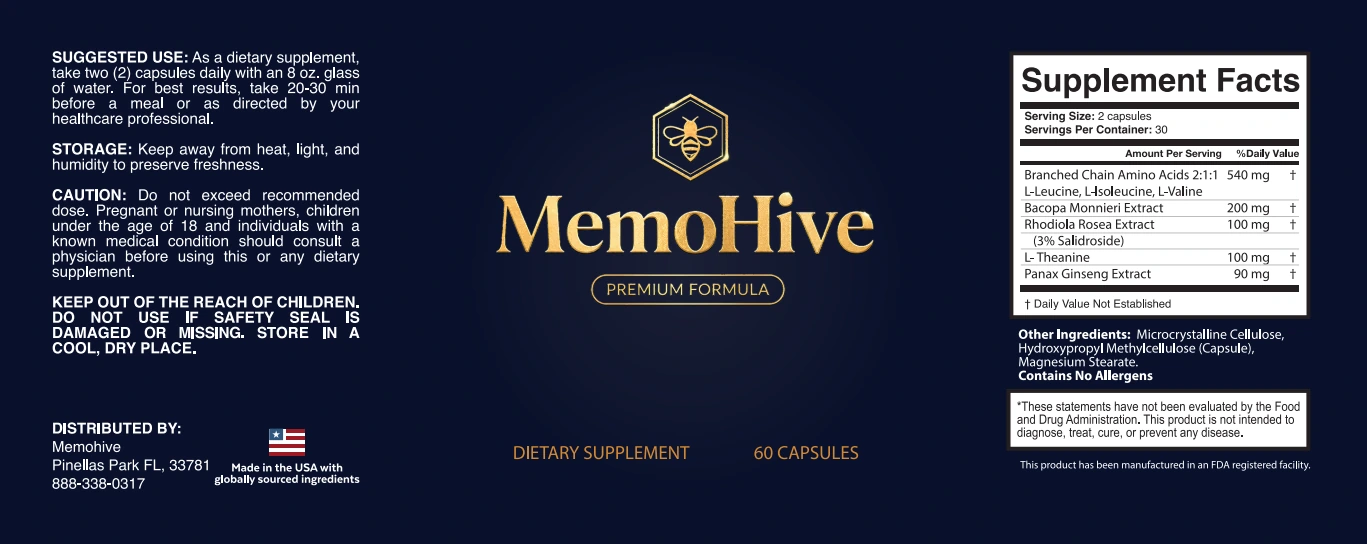
- 200 mg per serving. What this label prints, and it sits below the lowest band the published work has studied. Both numbers are on the page so the gap can be read rather than guessed.
- One trial gave the full amount and found nothing. A 2025 randomised trial ran 300 mg a day for the full twelve weeks and reported no difference from placebo on any of its three primary measures.
Where the 300 to 450 mg figure comes from
Two systematic reviews and one network meta-analysis carry almost all of the weight in the bacopa literature, and between them they settle what the amount in a bacopa trial normally is.
The 2012 systematic review found six randomised controlled trials that met its rules. Three different bacopa extracts were used across them, at 300 to 450 mg of extract a day, and every one of the six ran for twelve weeks. Its result is narrower than the headline usually suggests: performance improved on nine of seventeen tests in the domain of memory free recall, with little evidence of change in any other domain. Free recall is the task of producing a list back without a prompt to help you.
That three different extracts appear inside one range matters. The range is a range of products as well as of milligrams, and the review does not single one out as the better of the three.
The 2014 meta-analysis is choosier, because a meta-analysis has to be. It would admit only randomised, placebo-controlled human trials of chronic dosing lasting twelve weeks or more, using standardised extracts, with no co-medication. Nine studies and 518 subjects cleared that bar, and the pooled analysis of 437 of them found a shortened Trail B time and a decreased choice reaction time. Both of those are timed attention measures rather than memory ones, and the authors say so plainly in their own conclusion.
The 2026 network meta-analysis is the largest of the three, at twenty-nine randomised trials and 2,107 participants, and it is the one that puts the amounts into named bands. Its low-dose band runs from 300 mg a day to just under 600 mg, and its high-dose band is 600 mg a day and above. Working memory moved in the high band. The useful thing for a label reader is the bottom edge: 300 mg a day is the floor of the lowest band this literature studies at all.
| Source | Amounts used in the published work | Printed on this label |
|---|---|---|
| Pase 2012, six randomised trials | 300 to 450 mg of extract a day, across three different extracts, every trial twelve weeks long. | 200 mg per serving |
| Kongkeaw 2014, nine studies, 518 subjects | Standardised extracts, dosed chronically for twelve weeks or more. That duration was an entry requirement, not a result. | 200 mg per serving |
| Tiemtad 2026, twenty-nine randomised trials | Sorted into a lower band of 300 mg a day to under 600 mg, and a higher band of 600 mg a day and above. | 200 mg per serving |
The middle column describes the studies it came from. The right column is what the panel on this bottle carries. They are two different facts and nothing on this page merges them.
What twelve weeks is doing in that sentence
Every figure above arrives with a duration attached, and the duration is doing real work in the comparison rather than decorating it.
The 2014 meta-analysis set twelve weeks as a condition of entry. A shorter trial was not eligible, so the pooled result describes twelve-week dosing and cannot describe anything shorter. The six trials in the 2012 review all ran that long too, which is why the two papers agree without having to.
The consequence for reading a label is small and worth getting right. The 300 to 450 mg figure is a daily amount sustained over about three months, not a single dose someone took once. Setting 200 mg beside it is a comparison of one daily amount with another daily amount, and that is all it is. How long a person keeps taking a supplement is a separate question, and it is answered with this desk’s own buyer record on the timeline page rather than here.
The trial that gave the full amount and found nothing
A page that prints only the trials that worked is not reporting a literature, it is choosing from one. So here is the most recent randomised trial in the set, and it is negative.
Lopresti and Smith, 2025 gave 300 mg a day for twelve weeks to 101 adults aged 40 to 70 who reported problems with memory and attention, against placebo, double-blind. There was no between-group difference on verbal learning, on attention or on working memory. The three p-values are 0.391, 0.713 and 0.610, which is not a near miss.
Two secondary findings did move: self-reported stress reactivity and fatigue both improved. A secondary outcome in a trial that missed its primaries is a lead for the next study rather than a result, and it belongs on a page like this one described exactly that way.
Adverse reactions were reported more often in the bacopa arm than in the placebo arm, at p = 0.024, and were mostly digestive complaints and headaches.
One null trial does not show that bacopa does nothing. It does show that the amount the literature uses, given for the length of time the literature uses, produced nothing measurable in one careful study of a hundred people. That sits in the record beside the positive trials, not instead of them.
| Study | What it gave | What moved | What did not |
|---|---|---|---|
| Morgan and Stevens, 2010 | 300 mg a day for twelve weeks, 98 healthy Australians over 55. | Verbal learning, memory acquisition and delayed recall. | Nothing else reached significance, and the extract produced more frequent stools, abdominal cramps and nausea than placebo. |
| Lopresti and Smith, 2025 | 300 mg a day for twelve weeks, 101 adults aged 40 to 70. | Self-reported stress reactivity and fatigue, both secondary measures. | Verbal learning, attention and working memory, which were the three primary measures. |
| Pase 2012, pooling six trials | 300 to 450 mg a day for twelve weeks. | Nine of seventeen tests of memory free recall. | Every other cognitive domain the six trials measured. |
Three entries, two of them single trials and the third a pooled review of six. Reading them together is the point: the same amount for the same length of time did not produce the same answer twice.
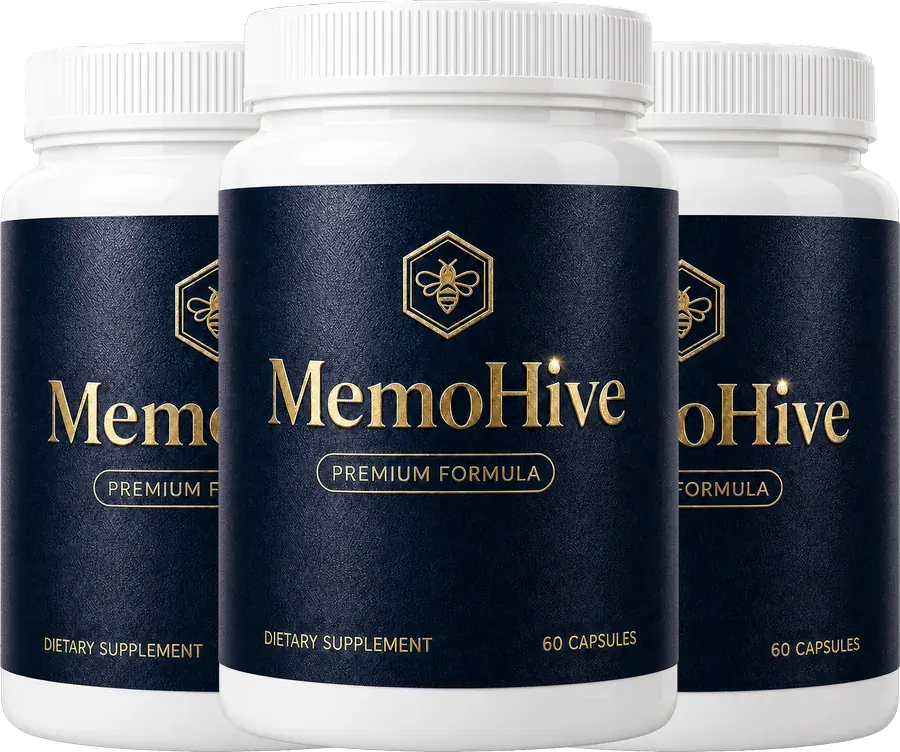
MemoHive, on the official website
Two capsules once daily, 60 capsules and 30 servings a bottle, and five ingredients with an amount printed beside every one. Sixty days to change your mind, and the seller’s own words for the policy are “60 days. Full refund. No debate.”
Order MemoHiveThe standardisation this panel leaves open
The StatPearls monograph on bacopa prints the dosing line as 300 to 450 mg a day of extracts usually standardised to 24 to 55 per cent bacosides. There are two numbers in that sentence, not one: a weight of extract, and the proportion of the compounds the extract is measured by.
This panel gives the first of the two. It carries 200 mg of bacopa monnieri extract and leaves the bacoside percentage open, which means the comparison available on this page is extract weight against extract weight. That is the comparison the printed information supports, and it is worth saying out loud that a panel naming a percentage would support a second one as well.
It cuts in both directions, which is why it is here rather than in a footnote. An extract with no stated bacoside figure could be richer or poorer in bacosides than the ones the trials used, and nothing on the label settles which. The monograph is also the source for the two practical facts worth carrying away from it: traditional use runs to 5 to 10 g a day of the crude herb, which is a different preparation entirely and not a comparator for an extract, and the commonest complaints reported with bacopa are gastrointestinal. That last point is on the safety page with the rest of the panel’s reported effects.

What a 200 mg row lets a reader conclude
Three things, and one thing it does not.
- The amount is printed, which is the precondition for everything else on this page. Most of this shelf publishes a name and stops, and a name on its own cannot be set against a trial.
- It sits below the lowest band in the published work, and you can see by how much. Two hundred against a floor of three hundred is a third short of the bottom of the studied range.
- The comparison is possible at all, which is the useful consequence of a fully specified panel. The ingredients page runs the same exercise for all five rows and the label page transcribes the panel those amounts are read from.
What it does not let anyone conclude is what 200 mg a day of this particular extract does, because no published trial has given it. That is an honest place to leave the question, and it is a better place than a bottle that keeps its number to itself: here the gap is visible and a reader can price it.
What this is, and what it is not. MemoHive is a dietary supplement. It is not a medicine, it is not a treatment for any condition, and nothing on this page describes it as one. Every study named here tested a single ingredient, at its own amount, in its own group of people, and none of them tested this formula. Memory or thinking that is changing in a way that worries you is worth raising with a clinician rather than answering with a capsule.
Sources cited in this article
- Pase MP, Kean J, Sarris J, Neale C, Scholey AB, Stough C. The cognitive-enhancing effects of Bacopa monnieri: a systematic review of randomized, controlled human clinical trials. J Altern Complement Med. 2012;18(7):647-52. PMID 22747190. https://pubmed.ncbi.nlm.nih.gov/22747190/
- Kongkeaw C, Dilokthornsakul P, Thanarangsarit P, Limpeanchob N, Norman Scholfield C. Meta-analysis of randomized controlled trials on cognitive effects of Bacopa monnieri extract. J Ethnopharmacol. 2014;151(1):528-35. PMID 24252493. https://pubmed.ncbi.nlm.nih.gov/24252493/
- Tiemtad P, Ingkaninan K, Temkitthawon P, Thimkorn P, Rattanachaisit N, Teaktong T, Dhippayom T. Comparative effects of Bacopa monnieri and Ginkgo biloba on cognitive functions: A systematic review and network meta-analysis. Phytomedicine. 2026;153:157915. PMID 41678913. https://pubmed.ncbi.nlm.nih.gov/41678913/
- Morgan A, Stevens J. Does Bacopa monnieri improve memory performance in older persons? Results of a randomized, placebo-controlled, double-blind trial. J Altern Complement Med. 2010;16(7):753-9. PMID 20590480. https://pubmed.ncbi.nlm.nih.gov/20590480/
- Lopresti AL, Smith SJ. The Effects of a Bacopa monnieri Extract (Bacumen) on Cognition, Stress, and Fatigue in Healthy Adults: A Randomized, Double-Blind, Placebo-Controlled Trial. Clin Drug Investig. 2025;45(12):967-982. PMID 41091332. https://pubmed.ncbi.nlm.nih.gov/41091332/
- Walker EA, Pellegrini MV. Bacopa monnieri. In: StatPearls. Treasure Island (FL): StatPearls Publishing. NCBI Bookshelf NBK589635, last updated 17 March 2023. https://www.ncbi.nlm.nih.gov/books/NBK589635/